How to Choose the Best Kayak Paddle
Kayak Paddle Buying Guide
So you've got yourself a kayak. Great! However, you're not going to get that far on the water without a paddle. It can get confusing knowing which paddle is right for you.
The aim of this blog post is to help you find your perfect paddle.
There are three aspects to consider with paddles:
- Paddle Length
- Blade Shape
- Shaft and Blade Materials
Paddle Length
Paddle length is determined by the width of your boat and your height. The wider the kayak and/or the taller you are, the wider the paddle you will need to comfortably reach the water
Paddle Sizing Chart
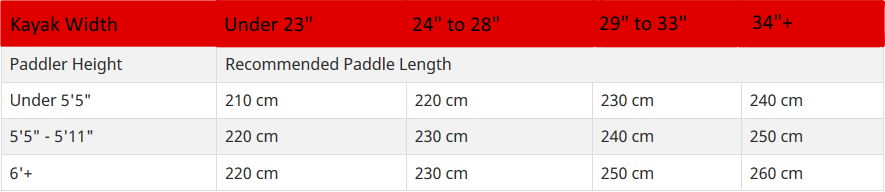
If you are sitting in an elevated seat, such as a fishing kayak or some sit-on-top kayaks, consider adding 10 cm to the paddle length.
Blade Shape
Racks for Cars offers two styles of blades: high-angle and low-angle.
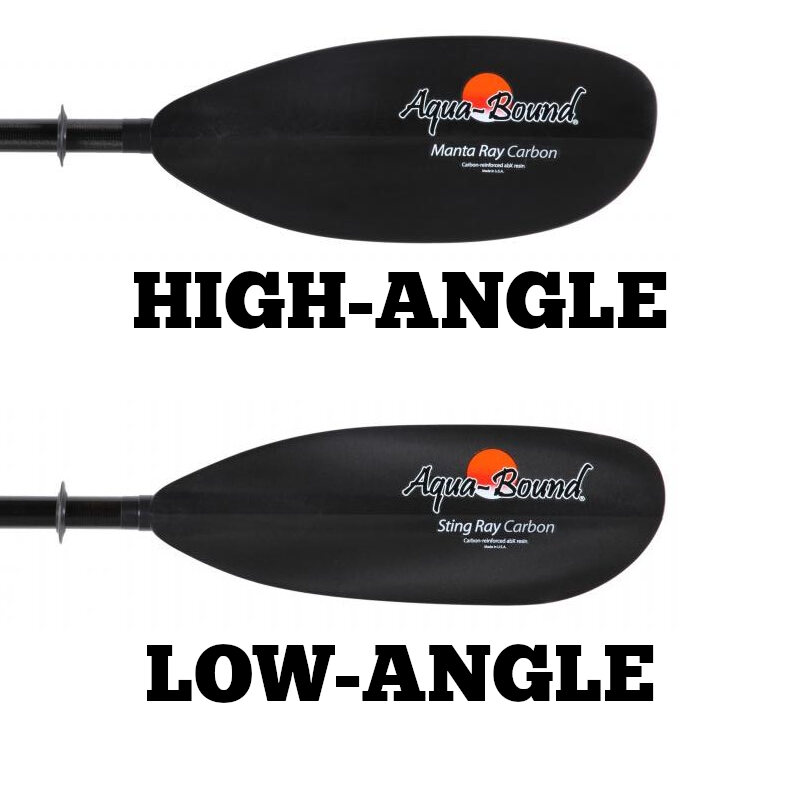
High-angle Blades
High-angle blades are shorter and wider than low-angle paddle blades. High-angle blades are named as such due to the angle at which the blade enters the water (generally 45 degrees or greater).
The high-angle blade is designed to catch and hold the water, propelling your kayak forward faster.
High-angle blades suit paddlers who:
- Haul a lot of gear regularly, particularly anglers
- Love whitewater kayaking or pack-rafting
- Love to kayak surf or other types of aggressive paddling
Check out our Aqua-Bound Manta Ray paddles if the high-angle paddle is right for you.
Low-angle Blades
The low-angle blade is longer and narrower than their high-angle counterparts. Low-angle blades are named as such due to the reduced angle at which the blade enters the water (generally between 20 and 30 degrees).
Low-angle blades offer a more relaxed paddling experience.
- Prefer more relaxed paddling
- Love to be on the water for many hours (or even days)
- Want paddling to be easier on the body
Check out our Aqua-Bound Sting Ray paddles if the low-angle paddle is right for you.
Shaft and Blade Materials
The materials the paddle is made of greatly effects the strength and weight of the paddle. Plastic, aluminum, fiberglass, and carbon fiber are some of the most commonly used materials.
Plastic abx blades with aluminum shafts
These paddles are made of sturdy, cost effective materials.
Aluminum shafts are durable but can be cold to touch, especially in cooler climates with frigid waters.
Plastic blades may be durable but will also be heavier and more flexible than the higher end fiberglass or carbon blades.
These paddles are great for beginners and will make for a great spare paddle when you are ready to make the jump to a nicer, light weight paddle.
Take a look at the Beluga Marathon paddles if this type of paddle is right for you.
Fiberglass
Fiberglass is the most widely used material in paddle manufacturing.
Fiberglass paddles are significantly lighter than plastic/aluminum paddles and will feel both more comfortable and warmer in your hands, helping to extend your paddling season into the cooler months.
Take a look at the Aqua-Bound Manta Ray Hybrid or the Aqua-Bound Sting Ray Hybrid paddles if this type of paddle is right for you.
Carbon Fiber
Paddles made entirely of carbon fiber are remarkably light-weight and robust.
Take a look at the Aqua-Bound Manta Ray Carbon or the Aqua-Bound Sting Ray Carbon paddles if this type of paddle is right for you.
Feel free to give us a call if you still have questions over which paddle is right for you, our expert staff will be more than happy to help you out!
